“The Vanishing Cow.” Antennae 24 (Spring 2013)
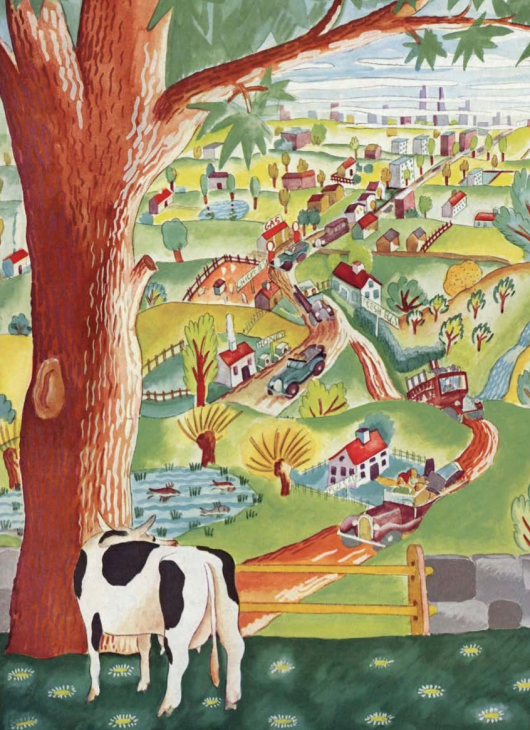
Starting from 1934, the covers of The New Yorker began to portray images of melancholy animals looking at the changes occurring in the American landscape at the time, endangering their presence in the modern way of living. The essay chronicles the story of the vanishing animal, a recurring theme of the magazine’s covers from the mid-thirties to the mid-sixties, as a visual counterpart to the advancement of progress and the effects it had on the landscape, as well as on the utopian pastoral ideal that it purported to democratize among the middle class. The thread linking these New Yorker covers therefore offers a modern rendition of an American Paradise Lost, and the artists’ illustrations become what Akira Mizuta Lippit calls ‘virtual shelters for displaced animals.’ Among several popular magazines, The New Yorker was by far the greatest chronicler of this loss, despite its urban focus, or perhaps thanks to it, as it allowed a sense of unbiased detachment and urbane condescendence towards the suburbs and the country.
 Andrea Vesentini